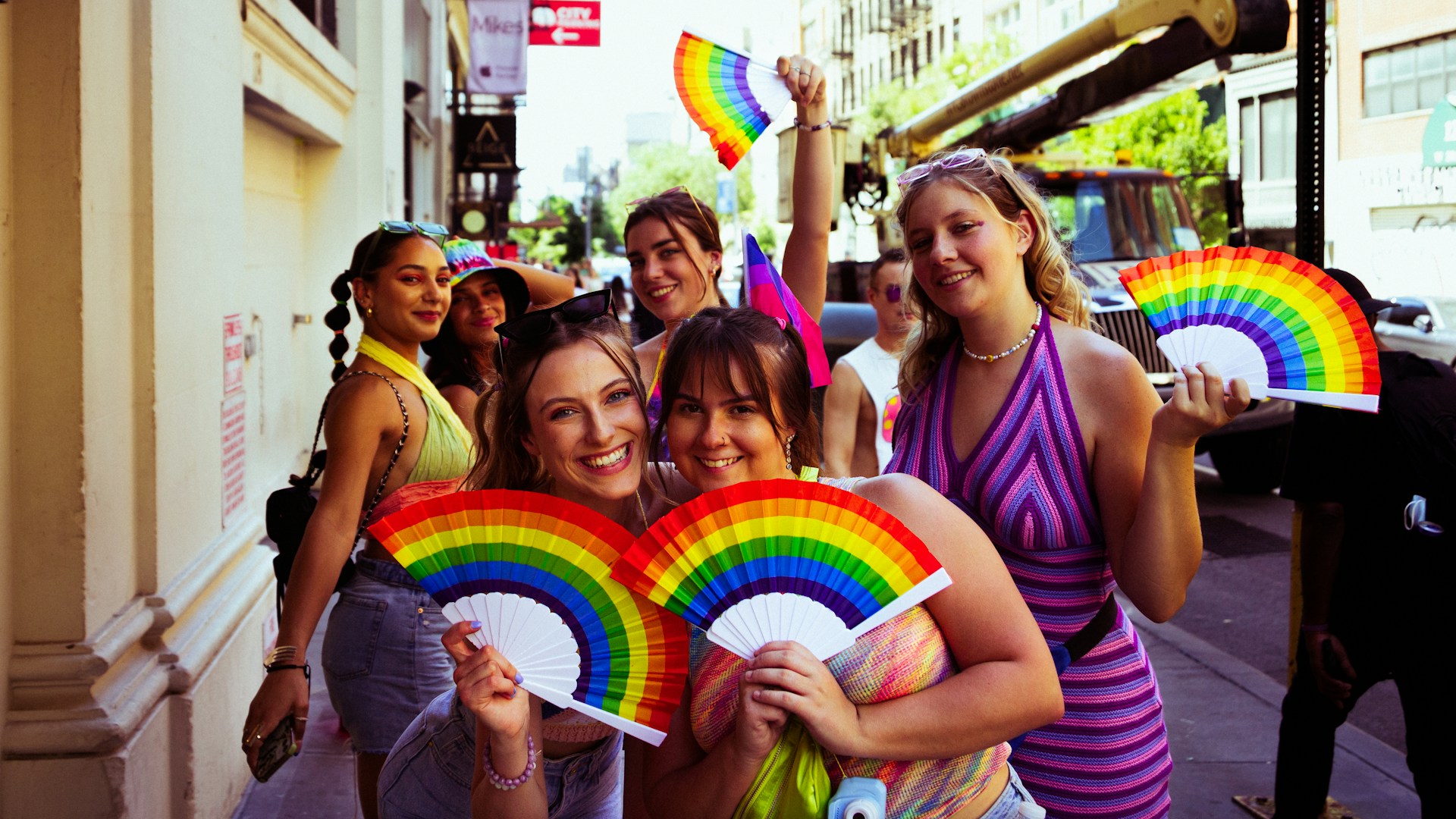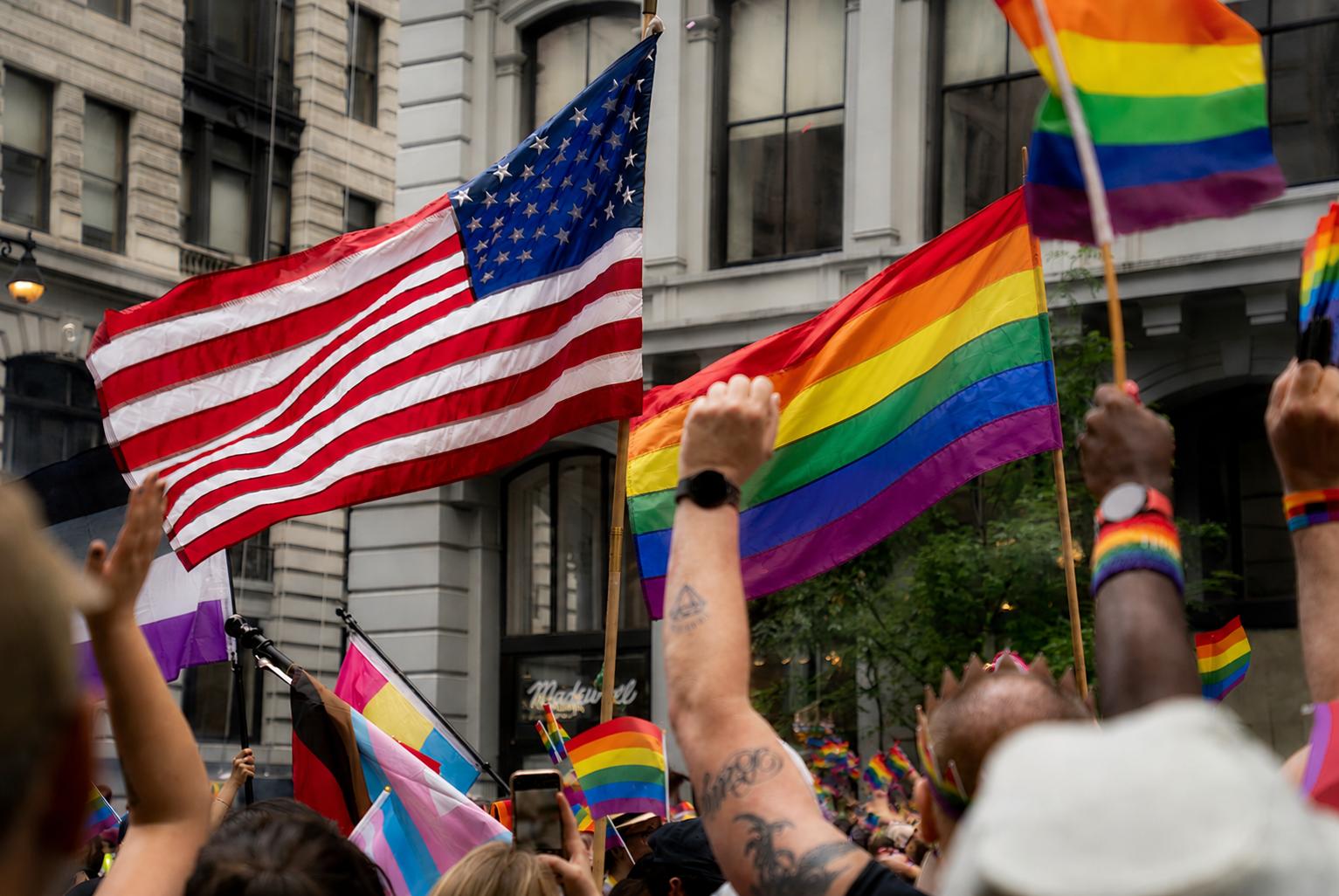
Millions of people come together to celebrate LGBTQ+ pride each year, united in joy and protest for Pride Month. What started as a resistance movement has now become a nationwide celebration of queer culture and activism in the USA.
But what got us to this point? From the events that sparked the resistance to the organizations that set the stage, let’s jump into the history of Pride Month.
The Key History of LGBTQ+ Pride
The history of Pride Month is a tumultuous one, with the LGBTQ+ community facing oppression, violence, and discrimination for centuries. Forced to fight for their rights and freedoms, it then became an uphill battle against state laws and prejudice.
Here we’ll delve into the obstacles the gay community faced and the resilient spirit of those who fought for their liberties.

Organizations Pave the Way for LGBTQ+ Pride
The twentieth century saw a number of humanitarian organizations arise after an era of war and global conflict. These organizations were key in advocating for human rights and several were instrumental for the LGBTQ+ Pride movement.
1924: The Society of Human Rights Movement is Founded
Established on December 10, 1924, by Henry Gerber, the Society of Human Rights Movement was the first documented gay rights organization in the USA. Inspired by German advocacy groups like Magnus Hirschfeld’s Scientific-Humanitarian Committee (the first LGBTQ+ rights organization in the world), the society’s goals were to protect the interests of individuals facing discrimination for their sexual orientation.
The group published Friendship and Freedom: the first American publication for the gay community. According to police, this newsletter violated federal laws against mailing obscene materials, and the group disbanded after a number of arrests in 1925. Gerber’s charges were dismissed, but legal costs prevented the society from recovering. Although short-lived, this movement was a major step for the LGBTQ+ Pride movement.

1950: The Mattachine Society is Established
On November 11, 1950, former communist organizer Henry Hay and a group of activists founded The Mattachine Society, the first lasting gay rights organization in the USA. It began as a secret society in Los Angeles with their first mission focused on educating the oppressed gay community and challenging discriminatory laws.
The movement’s name was inspired by the French masque group Société Mattachine, reflecting the similarities between the masked dancers and gay men who wore a different kind of “mask” to conform to heteronormative culture. The group grew to a national organization in the 50s and gained many new members after the successful defense of founder Dale Jennings, who was arrested in 1952.
1955: Daughters of Bilitis is Formed
As the first lesbian civil and political rights organization in the USA, Daughters of Bilitis (DOB) was founded by lesbian couple Del Martin and Phyllis Lyon, alongside three other couples in San Francisco. It began as a secret alternative for the lesbian community when bars suffered police raids, before becoming a group centered on education and advocacy.
At first, DOB had two conflicting goals: remaining a secret and gaining new members. Its working-class members were uncomfortable with going public, simply wanting a safe space to be themselves, and left to form two other secret lesbian groups. DOB continued to educate women on gay history and self-advocacy, and formed branches across Rhode Island, New York, Chicago, and Los Angeles.

1969: Stonewall Riots
It’s likely you’ve heard of the ‘Stonewall Inn Riots’, also known as the ‘Stonewall Uprising’ or ‘Stonewall Protest’ when researching the history of Pride Month. This was a series of riots against a police raid that took place at The Stonewall Inn in 1969. Although not the first act of queer resistance, it was the catalyst for the USA Pride movement.
Violent police raids on gay bars were common and usually took place in the early evening. On this occasion, the Inn’s owners hadn’t been alerted to a police raid, and the police arrived on a busy Friday night. The officers soon lost control over the large crowd, and several riots followed over the next few days in New York. LGBTQ+ rights groups were quick to form, and their advocacy led to the first Pride parade and march a year later. It’s often said that the first Pride was a riot, which united thousands to campaign for equality.

1970: The First Pride Marches Take Place
The first USA Pride Marches were held on June 28, 1970, to commemorate the one-year anniversary of the Stonewall Inn Riots. The largest event, named The Christopher Street Liberation Day March, saw thousands of people march from New York’s Greenwich Village to Central Park.
Several similar events took place in Chicago, San Francisco, and Los Angeles during Pride Month, with crowds showcasing LGBTQ+ culture and protest. With the Pride movement having begun with more conservative and secretive advocacy groups, now was the time for active protest and participation.
1973: Homosexuality is Removed from the DSM
Another turning point for the LGBTQ+ Pride Movement was the removal of homosexuality from the Diagnostic and Statistical Manual of Mental Disorders (DSM). In 1973, the American Psychiatric Association (APA) asked all members to vote on whether homosexuality should still be deemed a mental disorder, to which 5,854 voted to remove it from the DSM, and 3,810 voted to keep it.
The APA replaced ‘homosexuality’ with ‘sexual orientation disturbance’ for those ‘in conflict with’ their sexuality. It wasn’t until 1987 that homosexuality was completely removed from the DSM, but this event signifies how the concept of a mental disorder can evolve due to societal change. It was a key step towards helping reduce both external and internalized homophobia.

Legal Battles and Setbacks for USA Pride
Legal battles surrounding LGBTQ+ Pride were long and arduous, with all American states having criminalized same-sex intimacy until the 1980s. These laws were enforced through police raids, entrapment, censorship, employment purges, and liquor-license rules that targeted gay bars.
Illinois became the first state to decriminalize sodomy in 1961, soon followed by Connecticut, then California, Colorado, Delaware, and others. However, individuals here still faced raids, job loss, military exclusion, and child-custody discrimination. The majority of states had decriminalized same-sex intimacy by the ‘80s, but the gay community still had a long way to go in their fight for freedom.

1986: Bowers v. Hardwick
The case of Bowers v. Hardwick was a significant setback as the US Supreme Court ruled to uphold the constitutionality of a Georgia sodomy law in 1986. This allowed all states to keep criminalizing same-sex intimacy, halting the progress of the LGBTQ+ Pride movement.
1993: “Don’t Ask, Don’t Tell”
Before 1993, the gay community was completely banned from serving in the US military; those who were identified as gay could be discharged. The 1993 “Don’t Ask, Don’t Tell” military policy meant that being homosexual was still grounds for discharge, but service members could not be asked if they were gay, and they could not disclose it. Now, the military had conditional tolerance towards the LGBTQ+ community, still forcing them to remain closeted.

1996: Defense of Marriage Act
The 1996 Defense of Marriage Act was a federal law that defined marriage as exclusively between one man and one woman. Same-sex marriages would not be recognized, and gay couples would be unable to access 1,000 federal protections, such as social security, joint tax returns, and immigration rights. This was a serious blow for the LGBTQ+ Pride movement.

Legal Progress for the Gay Community
The 2000s saw a significant shift from criminalization towards marriage equality for the LGBTQ+ community. Progress was still uneven and state-by-state, but the USA saw several breakthroughs for LGBTQ+ Pride and queer culture over this period.
2003: Bowers v. Hardwick is Overturned
In 2003, the remaining sodomy laws in 13 states were invalidated. The Supreme Court ruled in Lawrence v. Texas that the case applied to consensual relations among adults. It based its decision on the American principle of non-interference with consenting adults and their autonomy. This was a complete shift from the original ruling, where Hardwick’s argument had been based on the right to privacy.
2004: Massachusetts Legalizes Same-Sex Marriage
Massachusetts became the first state to legalize same-sex marriage in 2004, and this changed the trajectory of the LGBTQ+ Pride movement. In 2003, the Massachusetts court ruled that denying marriage to same-sex couples violated the state's constitution of equality and liberty. The gay community should be allowed to marry, rather than settle for civil partnerships.
This came into effect in 2004 and triggered several actions across the country. Some states considered allowing civil partnerships, and others passed constitutional amendments banning same-sex marriage. With the Defense of Marriage Act still in force, couples married in Massachusetts would still be treated as unmarried by the federal government. Nevertheless, it remains a key step for LGBTQ+ Pride, with thousands marrying in the first year and hundreds on the first day.

2010: Repeal of “Don’t Ask, Don’t Tell”
More than 12,000 service members had been discharged by 2008 under the “Don’t Ask, Don’t Tell” policy, with the repeal law passing Congress in 2010 and President Obama signing it on December 22. The law finally ended in 2011 after military certification and a waiting period, and from then on, the gay community could serve openly.
2015: Same-Sex Marriage is Legalized Nationwide
As a landmark step in Pride Month history, the Supreme Court legalized same-sex marriage nationwide through the case Obergefell v. Hodges on June 26, 2015. The Court ruled 5-4 that the Fourteenth Amendment required every state to:
- Issue marriage licenses to same-sex couples
- Recognize same-sex marriage legally performed in other states
Now, marriage equality no longer depended on the state. Gay couples in Ohio, Michigan, Kentucky, and Tennessee no longer suffered the restriction. This was a huge milestone in the LGBTQ+ Pride movement, with couples able to access equal marriage rights surrounding inheritance, tax, hospital visitation, adoption, spousal benefits, and legal parenthood protections.

Pride, Protest, and Progress
From secret societies in the 1950s to full-blown Pride marches today, the path towards LGBTQ+ equality has not been an easy one. If it hadn’t been for the brave individuals who challenged the law and helped empower others, USA Pride would not be where it is today.
Despite there now being many gay-friendly cities in the USA, Pride continues to be crucial in advocating for equal treatment. For example, it wasn’t until 2021 that LGBTQ+ homebuyers gained federal protection under the Fair Housing Act, and transgender rights are still in flux today. Progress can feel slow and difficult, but from studying the past, we know liberty can prevail.
FAQs on A History of LGBTQ+ Pride in the USA
Pride Month history is long and complex, with each event and individual playing a role in advancing the Pride movement. If you still have questions after all that, we’re not surprised! Here are some of the most frequently asked questions surrounding USA Pride.
What is Pride?
Pride is the promotion of equality for the LGBTQ+ community and acts as a movement against shame and social stigma. Each year, all over the world, millions of people march, dance, and celebrate Pride over Pride Month.
When did the LGBTQ+ Movement start?
While the modern LGBTQ+ Pride movement is thought to have begun over the Stonewall Inn Riots in 1969, advocacy for the gay community began in 1897 through German societies and committees.
When did Pride Month become a thing?
The Stonewall Inn Riots in 1969 are considered the origin of Pride Month. The first Pride parade and marches were held in 1970 as thousands protested against the treatment of the LGBTQ+ community. International LGBTQ+ Pride Day is held annually on June 28, the day the Riots began.
Who invented Pride Month?
Pride Month was not invented by one person but rather stemmed from the 1970 Christopher Street Liberation Day March in New York. This march was organized by activist Brenda Howard alongside LGBTQ+ activists Fred Sargeant, Craig Rodwell, Ellen Broidy, and Linda Rhodes.
Why is Pride Month important?
Although much progress has been made over the years, the journey to equality isn’t over. Pride Month serves as an important reminder of what it took to get here, as well as promoting visibility of LGBTQ+ identities and queer culture.
Why is Pride Month in June?
June is known as Pride Month due to the Stonewall Inn Riots taking place in June, 1969. The queer community protested against the police raid on the gay-friendly bar, and the first Pride marches took place a year later.
Who threw the first brick at Stonewall?
It’s not known who threw the first brick at Stonewall. Eyewitnesses reported the riot as a collective effort, and it’s thought that this image acts as more of a symbol of the protest.
Freedom To Choose Your Home
When it’s time to choose a new home, you need somewhere you can truly be yourself. Having a space that belongs to you is a feeling second to none.
If you’re planning to move, having an LGBTQ+-friendly realtor who understands your needs makes all the difference. At Gay Real Estate, our gay-friendly realtors can help you step into the next chapter comfortably, without fearing discrimination. Take the first step today and explore our list of realtors.